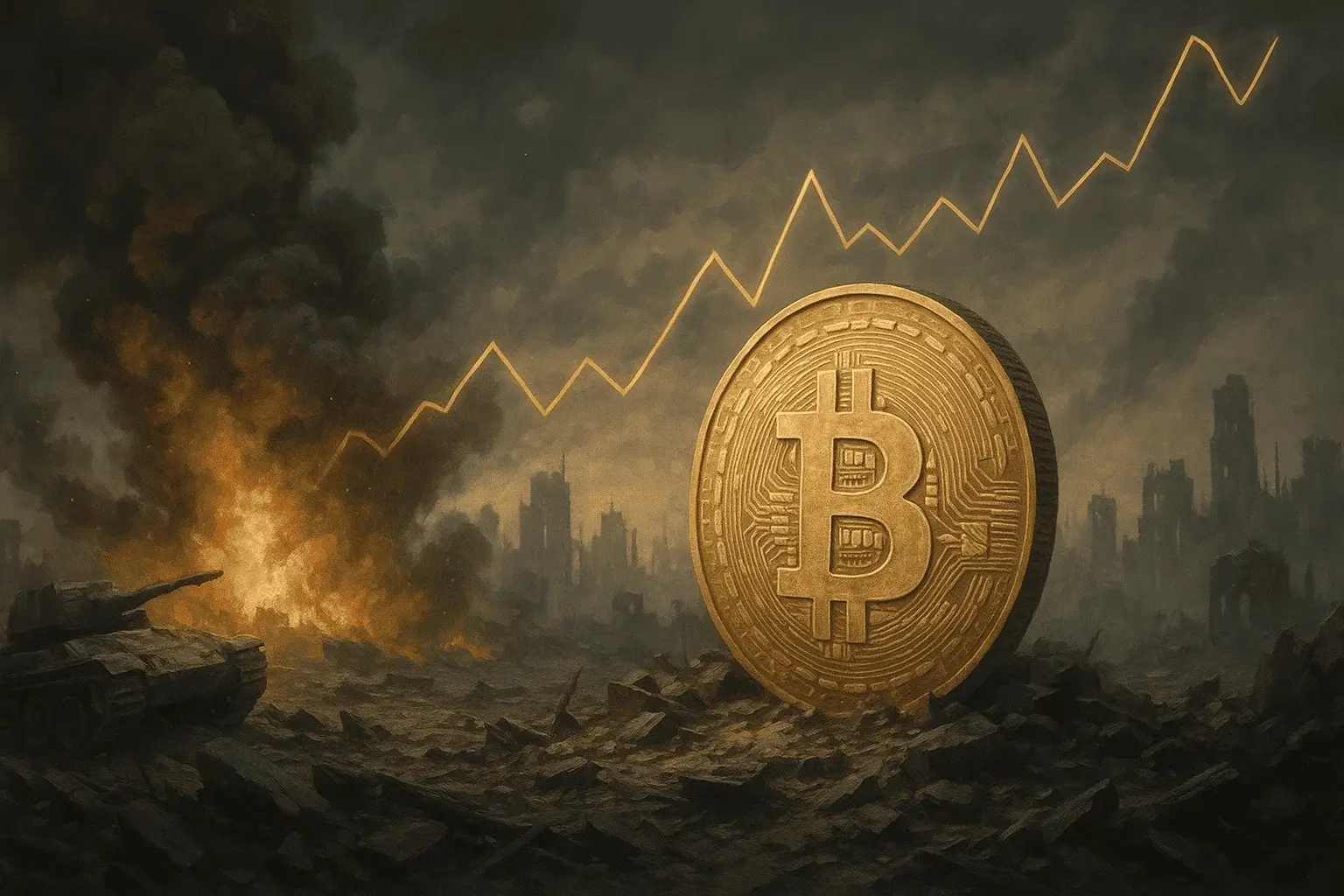
Political brands are increasingly penetrating the crypto industry—and today this is most noticeable in games. This week, the Spanish business publication Cinco Días described the launch of the 3D game Trump Billionaires Club, where the in-game economy is tied to the $TRUMP memecoin and user engagement mechanics.
For the market, this is a signal not so much about a specific politician, but about a direction: Web3 gaming is once again seeking a mass audience through recognizable themes and simple progression steps. When a product is understood without training, it's easier for the user to take the first step—buy a token, enter the game, complete tasks, and return tomorrow.
But this approach has a weak spot: the majority of gaming tokenomics live only on emotions and quickly burn out if the user has no clear reason to stay in the system. That is why 2025 looks like a race for mechanics that retain attention not with promises, but with regular action and predictable rewards.
Against this backdrop, memecoins are getting another chance to break out of the "buy and forget" mode into a format where the token becomes a participation tool. And here, the new project PEPENODE is trying to fill the niche: to combine meme energy with a clear gaming routine of mining, without requiring iron, electricity, or technical skills.
BUY PEPENODE
Why Gaming Memecoins Are Returning Attention to Simple Mechanics
Web3 games in 2025 need one thing: to convert the noise around a brand into a daily habit. Political and media themes provide traffic, but do not guarantee retention—users quickly leave if progress seems random or too complex.
Parallelly, the infrastructure side has become less painful for retail. According to Cointelegraph, average commissions on the Ethereum network after the Dencun update have noticeably decreased: in March 2025, the average swap was valued at approximately $0.39 versus around $86 a year earlier.
Hence the trend: projects are competing not only with memes, but also with "grounded" reward cycles—from simplified game quests to mining simulations. Against this backdrop, many investors are becoming interested in other market directions, including the list of the best altcoins for 2025.
PEPENODE currently looks like one of the variants in this logic, because it bets on regular activity and a clear interface, not on complex economics.
How PEPENODE Turns "Mining" into a Game Without Iron
The key idea of PEPENODE is positioning as the "world's first memecoin mine-to-earn": instead of classical mining with equipment, the project offers a virtual "mining" system. The entry is built around nodes and reward levels. This addresses three market pains at once: boring mining models, weak early incentives, and technical complexity for newcomers.
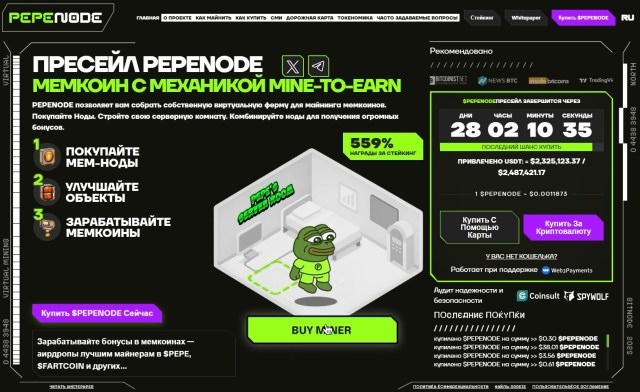
In product terms, this looks like a gamified panel. You buy and configure "node-miners," improve nodes to increase efficiency, and receive rewards, including memecoins like PEPE and Fartcoin. Importantly, the scenario of "enter — improve — collect reward" is simpler than dealing with iron and expenses.
Interest is also heating up the early demand dynamics. According to the presale team's data, PEPENODE has already attracted $2.3 million, and the token price is $0.001192. This is the level at which the base of early participants usually forms, if the product really promises activity after launch.
Large wallet tracking data indicates 2 purchases for a total of $215K; the largest deal—$51K—took place on February 8, 2025.
This bet has a clear logic: if the game finds an audience after launch, then "mining as a habit" may turn out to be stronger than the one-time hype around a loud name.